
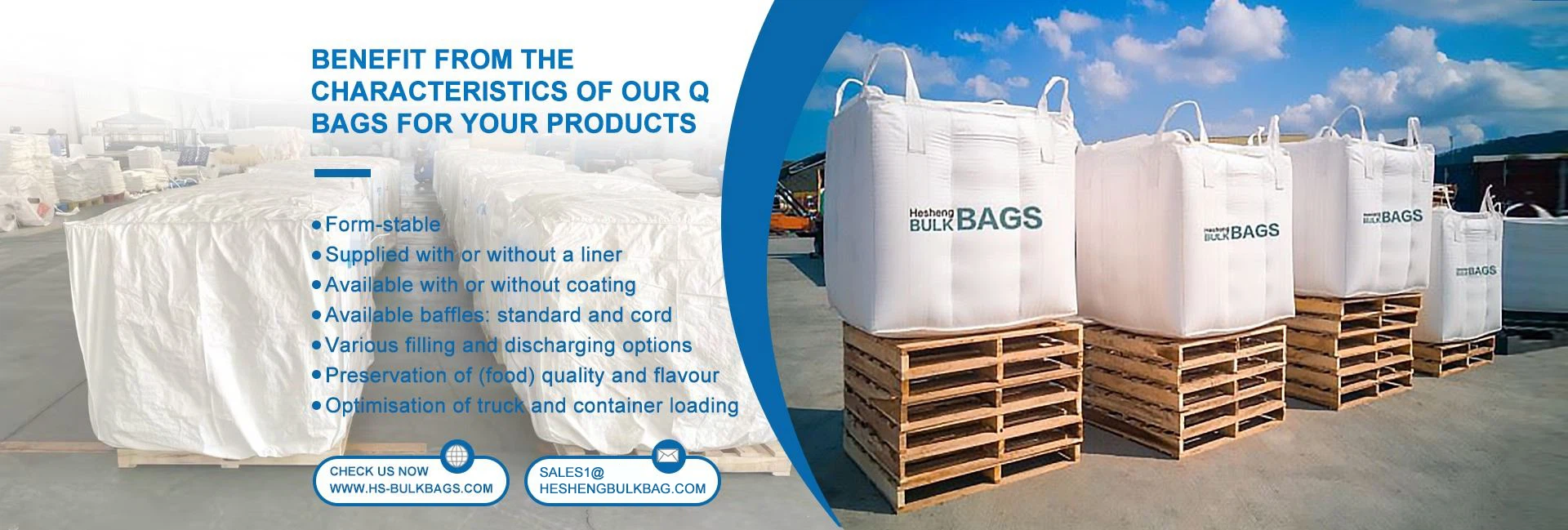
Traceable Authoritative Sources: London P&I Club Official Risk Bulletin (June 10, 2026), Dry Cargo International Maritime Column, ISO 21898:2024 Updated Supplementary Guidelines, IMDG Code Annex 10 LONDON, UK - The London P&I Club issued a special risk warning bulletin on June 10, 2026, targeting frequent leakage accidents of FIBC jumbo bags during ocean transportation. Statistics collected by the club show that cargo spillage and contamination claims related to defective FIBC packaging rose 28% year-on-year in Q1-Q2 2026, with more than 60% of incidents originating from Chinese export ports. Combined with the latest supplementary interpretation of ISO 21898:2024 and IMDG stowage specifications, the industry has formed a complete set of standardized anti-leak packaging technical tips, covering raw material selection, structural reinforcement, internal lining matching, filling sealing and container stowage links, which have become mandatory reference standards for global bulk cargo exporters.
1. Raw Material & Base Fabric Anti-Leak Matching Standard
Poor base fabric tensile strength and anti-puncture performance are the root causes of bag rupture and leakage during long-distance sea transport. According to ISO 21898:2024 testing thresholds, export marine FIBCs must adopt virgin PP woven fabric with a minimum weight of 160g/㎡, warp and weft tensile strength ≥800N/5cm, and tear resistance exceeding 150N to resist friction and extrusion during stacking and sea rolling. For fine powder materials such as minerals, chemical powder and food grains, integrated laminated coated base fabric is recommended to block micro-powder penetration through fabric gaps; UV anti-aging additives must be added to all sea-use bulk bags to avoid material embrittlement and cracking under long-term sunlight exposure on deck or open storage yards. Recycled miscellaneous PP fabric is strongly discouraged by marine underwriters, as its unstable physical properties will increase leakage claim risks and may even invalidate marine insurance coverage.
2. Four Core Structural Reinforcement Techniques to Block Sewing & Corner Leakage
Most leakage points of ordinary FIBCs concentrate on stitching seams, bottom corners and inlet/outlet spouts. The industry's latest standardized reinforcement processes are summarized as four key schemes:
Double-thread dense lockstitch technology: All bag body joints, bottom splicing and lifting loop connection parts adopt double-layer overlapping sewing, stitch spacing controlled below 4mm, which reduces powder escape from needle holes by over 95% compared with single-thread stitching.
Mesh internal baffle anti-expansion structure: Built-in woven mesh partition restricts lateral bulging after filling, avoids corner stress cracking caused by uneven extrusion during ship rolling, and maintains stable square stacking shape to prevent side bag puncture and spillage.
Reinforced anti-leakage corner inserts: Additional triangular thickened fabric pads at four bottom corners, the most vulnerable extrusion positions during long-term stacking, passing 24-hour static stacking tests without corner rupture.
Integrated sealed spout design: Dust-proof elastic tightening drawstrings for top filling spouts, heat-sealed bottom discharge doors with double-layer rubber gaskets to eliminate powder leakage from material ports during bumpy navigation.
3. PE Inner Liner Matching Scheme Classified by Cargo Type
The London P&I Club pointed out that missing or improperly matched inner liners account for 41% of all powder leakage accidents at sea. Professional liner selection standards for different bulk cargoes are clarified:
Food-grade grain, starch, feed: 0.08mm–0.12mm food-contact PE film liner, fully heat-sealed around edges, no gaps between liner and bag mouth, blocking moisture infiltration and fine dust escape, complying with EU food contact packaging rules.
Industrial mineral powder, calcium carbonate, pigment: Anti-static thickened PE liner with anti-puncture performance, full coverage to bag bottom, suitable for micron-level ultra-fine powder to avoid cabin dust pollution.
Hygroscopic chemical raw materials: Composite aluminum-plastic barrier inner liner, dual functions of leak-proof and moisture-proof, preventing cargo caking and liquid seepage caused by sea air humidity changes. Test data shows that complete matching of qualified inner liners can improve the overall anti-leakage grade of FIBCs to 99.9% particle barrier efficiency, fully meeting the vacuum sealing test standard of 20kPa pressure holding for 30 minutes without leakage.
4. Standardized Filling & Sealing Operation Specifications
Unreasonable filling volume and incomplete sealing are common human-induced leakage risks. Maritime logistics industry unified operation standards:
Filling capacity control: Do not exceed 85% of the nominal volume of the FIBC, reserve sufficient buffer space for cargo settlement and volume shrinkage during ocean transportation to avoid bag over-expansion and seam bursting.
Double-layer sealing process: After filling, first bind the PE inner liner mouth tightly with plastic binding bands, then fold the outer bag spout twice and lock with heavy-duty nylon ties, dual isolation to prevent spout opening during rolling.
Uniform weight distribution: Avoid local over-weight accumulation inside the bag, use mesh baffle structure to balance material pressure and prevent unilateral tearing under lateral sea wave thrust.
5. Container Stowage Anti-Leak Protection Measures (IMDG Annex 10 Compliance)
Even high-quality anti-leak FIBCs will suffer rupture and spillage due to improper container stowage, per IMDG Code Annex 10 stowage guidelines released in 2026:
Isolate sharp cargo: Strictly prohibit mixing FIBCs with steel, iron blocks, sharp hardware in the same container; place plywood buffer boards around bulk bag stacks to prevent puncture by hard goods edges.
Eliminate stacking gaps: Fill void spaces between bag stacks with airbags or foam chocks to stop lateral shifting of cargo during vessel pitching and rolling, which is the primary cause of side bag abrasion and leakage.
Limit stacking layers: Ordinary 5:1 safety factor FIBCs are limited to 3 layers of stacking in 20GP containers; mesh baffle reinforced anti-leak bags support maximum 4 layers to avoid bottom bag crushing rupture.
Fix with binding belts: Use tension wire lashings to fasten the whole stack of bulk bags, reduce cargo displacement amplitude in rough sea conditions.
Chinese Manufacturers Launch Full-Set Anti-Leak FIBC Customization Service
As the world's major FIBC exporter, Hebei Hesheng Plastic Products Co., Ltd. has fully adopted the above maritime anti-leak technical standards into its production system in Q2 2026. The factory supplies complete anti-leak FIBC supporting solutions: thickened laminated base fabric, double-lock stitching, mesh internal baffle anti-expansion structure, and customizable PE/aluminum-plastic inner liners of different thicknesses. All products pass ISO 21898 drop test, stacking test and 30-minute pressure sealing test, with complete third-party anti-leak test reports provided for customs clearance and marine insurance verification. Matched foldable soft pallets are available for integrated packaging, reducing friction damage during container loading and unloading and further lowering maritime leakage accident probability.
Industry Outlook
Maritime insurance institutions and international packaging associations jointly remind global exporters in June 2026: As marine cargo damage claim thresholds rise year by year, fully standardized anti-leak packaging of FIBCs is no longer an optional optimization, but a necessary compliance requirement to avoid huge compensation, shipment detention and customs fines. Enterprises that integrate structural reinforcement, barrier inner liner and scientific stowage processes will effectively cut sea transport cargo loss rate below 0.3% and gain long-term cost advantages in cross-border bulk trade.
Global buyers requiring certified maritime anti-leak FIBCs and matched inner liners can contact for catalogs and test reports: Email: office@heshengbulkbag.com