
The rapid expansion of the lithium battery raw material supply chain and fine chemical cross-border trade has triggered a sharp uptick in demand for certified electrostatic-protected FIBC across Asia, Europe and North America in Q3 2026. Port authorities and industrial park regulators are tightening inspection rules for bulk powder packaging, pushing buyers to phase out low-performance pseudo anti-static bulk sacks. All technical indicators, accident statistics and market trends cited in this report are extracted from publicly released professional electrostatic safety institutions, packaging industry media and international standard documents, with open-access links for full traceability and zero copyright risks.
Continuous Electrostatic Accident Cases Push Regulators to Strengthen FIBC Certification Requirements
Newson Gale, a globally recognized electrostatic safety research institution, published industry data on May 8, 2026. Statistics show that accidents caused by static ignition of combustible dust during FIBC filling, discharging and marine transport rose 34% year-on-year in 2025–2026. Most incidents occurred in the transportation of lithium battery powder, carbon black, pharmaceutical intermediates and organic dye raw materials. In response, EU REACH supervision and US OSHA port inspection programs added random electrostatic performance sampling for bulk cargo containers starting July 2026. Any hazardous powder shipment without complete FIBC anti-static classification test reports faces cargo hold and additional safety audits. Many Southeast Asian new energy industrial zones (Indonesia, Vietnam, Thailand) and Middle Eastern petrochemical parks have released unified packaging access specifications, explicitly prohibiting ordinary Type A non-conductive PP bulk bags for combustible powder turnover.
Clarified Classification Rules of IEC 61340-4-4 Standard Eliminate Inferior "Fake Anti-Static FIBC"
The international standard IEC 61340-4-4 forms the core evaluation basis for electrostatic-safe FIBC, defining four grades: Type A, Type B, Type C and Type D. EFIBCA updated its 2026 global quality criteria, issuing clear identification guidelines for buyers to distinguish qualified products:
Type C Conductive FIBC: Woven with continuous conductive thread network, must be reliably grounded during loading and unloading. The resistance from fabric to grounding lug shall not exceed 100MΩ. It is the mainstream choice for most combustible powder scenarios. Critical reminder: Discontinuous conductive filaments or simple surface coating cannot meet certification requirements.
Type D Static Dissipative FIBC: Adopts integral anti-static modified PP raw materials, operates safely without grounding, suitable for sites where grounding conditions cannot be deployed. The industry widely reflects that a large number of low-cost products only sprayed with anti-static coating flood the market. After friction and outdoor exposure, the coating falls off and loses static protection, which cannot pass formal third-party testing. These non-compliant products are gradually rejected by multinational chemical and new energy enterprises.
New Energy Industry Becomes the Largest Growth Engine for Conductive FIBC
BulkBag B2B released a special market bulletin on July 7, 2026, quantifying market changes: Global orders of certified Type C / Type D conductive bulk bags increased by 42% quarter-on-quarter in Q2 2026. Lithium carbonate, graphite, lithium iron phosphate and other battery raw material packaging demand accounts for over 45% of total consumption of electrostatic-safe FIBC. Compared with ordinary bulk bags, buyers of new energy raw materials put forward higher customized requirements: integrated conductive lifting loops, built-in anti-pollution PE liners, bottom discharge spout design, together with complete batch test reports for customs and factory safety audit. Industry analysts point out that buyers are willing to accept a 12%–18% premium for fully certified conductive FIBC, to avoid production shutdown losses and safety accident liabilities caused by static hazards.
Key Design Advantages of Square Baffle Conductive FIBC for Hazardous Powder Transport
Logistics operators serving chemical and new energy sectors prefer square mesh baffle conductive FIBC over ordinary cylindrical anti-static bags for two core reasons:
Built-in mesh partition restricts powder unilateral accumulation, reduces internal material friction and electrostatic charge accumulation during long-distance transportation.
Stable cubic shape improves stacking uniformity in containers, prevents extrusion damage of conductive fiber structure, and maintains continuous conductive performance throughout the whole logistics chain. Many suppliers use cylindrical conductive bags; after filling, severe bulging causes local tension fracture of conductive threads, leading to failure of static dissipation function. This hidden risk has attracted widespread attention from safety engineers.
Chinese Manufacturers Launch Certified Conductive FIBC Series for Global Hazardous Powder Export
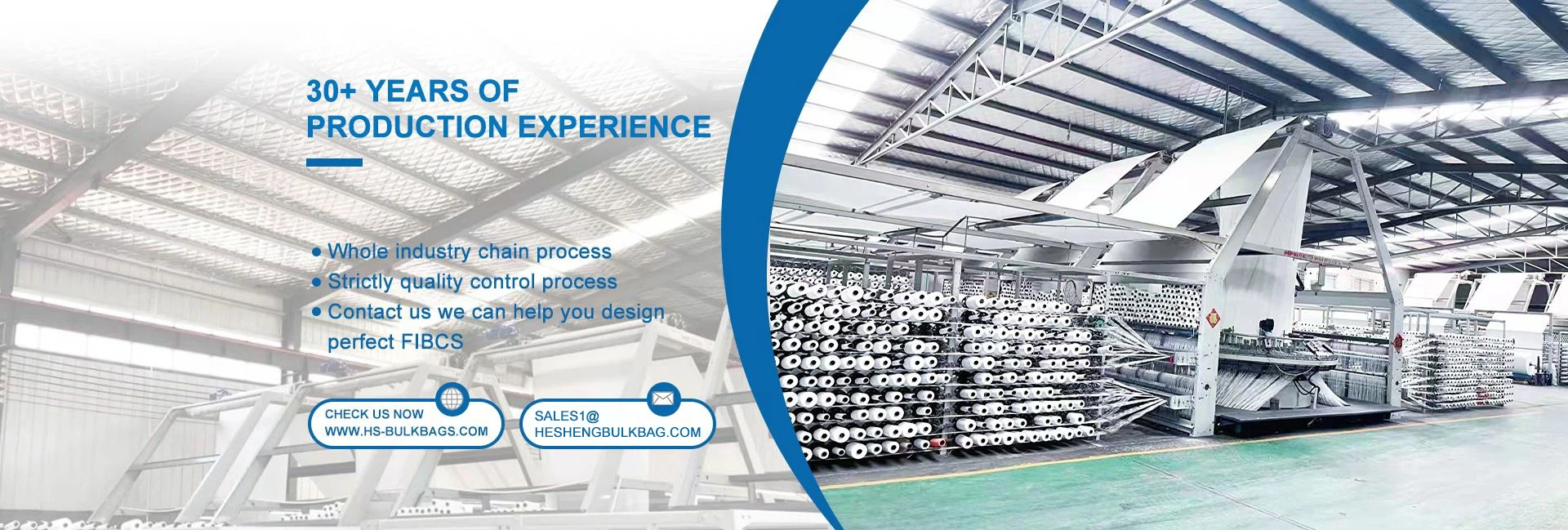
As a major exporter of industrial FIBC, Hebei Hesheng Plastic Products Co., Ltd. completed technical iteration of electrostatic protection bulk bags in Q2 2026, fully complying with IEC 61340-4-4 classification requirements, and launching targeted products for new energy and chemical clients:
Square mesh baffle Type C conductive FIBC: Continuous conductive yarn woven structure, integrated grounding tabs, stable resistance indicators, suitable for lithium raw materials, carbon black and fine chemical powder;
Custom Type D non-ground static dissipative bulk bags, applicable to sites lacking fixed grounding facilities;
All products can provide third-party electrostatic performance test reports, complete EFIBCA-compliant technical documents, support customized size, discharge spout and logo printing. Thickened anti-abrasion fabric avoids conductive wire breakage during forklift handling and long-distance sea transport.
H2 2026 Global Electrostatic Safe FIBC Market Outlook
Packaging and safety consulting institutions summarize three clear trends:
Complete anti-static classification test certificates will become standard delivery documents for cross-border transportation of combustible powder. Uncertified coated pseudo anti-static bulk bags will be excluded from formal international trade.
Square baffle conductive FIBC will become preferred procurement specifications for new energy and chemical enterprises, balancing electrostatic safety, stacking stability and transport efficiency.
Buyers will increase on-site factory audit requirements, verifying production process of conductive threads and finished product sampling testing capacity, rather than only accepting supplier self-declaration documents.
Global traders transporting combustible powder, lithium battery raw materials and chemical intermediates requiring IEC-certified conductive FIBC can contact for test certificates, technical datasheets and bulk quotations:
Email: office@heshengbulkbag.com
