
With the growing demand for container bags in the international market, my country's export of container bags has further increased. At the same time, the international market has increasingly stringent quality requirements for container bag products. Therefore, how to improve the strength of container bag products, select materials reasonably, and make reasonable process ratios, and how to design high-quality container bags based on the actual situation of the enterprise under the premise of implementing national standards, are important issues facing container bag manufacturers.
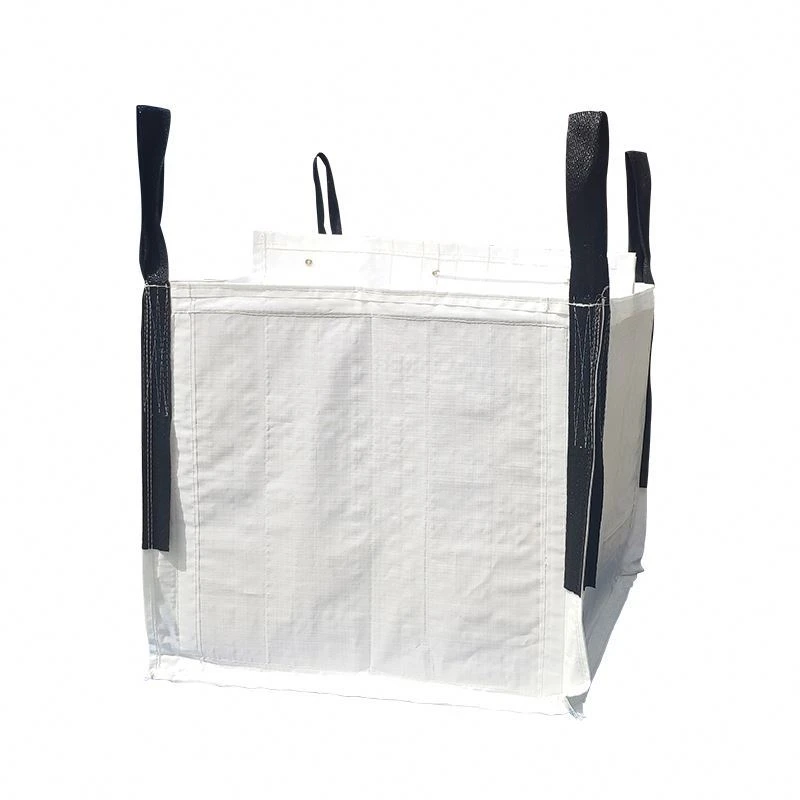
Design Basis and Principles of Container Bags
The design of container bags must strictly implement the GB/T10454-2000 standard to ensure that the packaged export goods are intact during loading, unloading, transportation, and storage. The design of container bags should consider the following four key points, namely safety, storage, usability, and sealing.
• Safety
Mainly refers to the strength of the container bag. When designing, the packaging volume, the weight of the load, and the packaging unit (number) should be considered, as well as the distance of transportation the number of times of handling, and what kind of transportation tools and methods to use. GB/T10454-2000 strictly stipulates the technical index requirements for the base fabric and slings of container bags. From a safety perspective, it is clear that the factory container bag structure is all bottom hanging structures, and the safety factor must reach 1:6.
• Storage
Material selection and process ratio should be reasonable according to the user's use conditions. For example, the anti-aging ability of plastic materials under sunlight exposure is a major indicator that determines the quality of container bags, and it is also a problem that container bags often encounter in actual use. Therefore, attention should be paid to the use of anti-ultraviolet agents and the selection of ultraviolet-resistant materials during production.
• Usability
When designing container bags, full consideration should be given to the specific ways and methods of customers using container bags, such as lifting, transportation methods, and the performance of the loaded materials. In addition, it is also necessary to consider whether the packaged goods are food and to ensure that there is no adverse effect on the packaged food.
• Sealing performance
Different packaged materials have different sealing requirements. For example, powders toxic materials, and materials that are afraid of contamination have very strict requirements for sealing performance; special materials that are easily affected by moisture or mildew also have special requirements for airtightness. Therefore, when designing container bags, pay attention to the influence of the base fabric laminating process and sewing process on sealing performance.
• Issues that should be noted
When designing container bags, the weight of the loaded goods must be clearly determined first, and the volume of the container bag must be determined according to the specific gravity of the packed materials. It also depends on whether the loaded materials are sharp and hard block materials. If so, the base fabric should be thicker when designing the container bag. Otherwise, it can be thinner. In actual design, for a 500kg container bag, the base fabric is generally (150-170)G/m2, the longitudinal and transverse tensile strength of the base fabric is (1470-1700)N/5cm, and the elongation is 20%-35%; for a container bag with a load of more than 1000kg, the base fabric is generally (170-210)G/m2, the longitudinal and transverse tensile strength of the base fabric is (1700-2000)N/5cm, and the elongation is 20%-35%.
• Improve the strength of the single yarn
To ensure the strength of the base fabric, the tensile strength of the yarn must be improved. The relative strength of the flat yarn should reach more than 0.4N/tex, and the elongation should be 15%-30%. In the actual processing process, the amount of filler masterbatch must be strictly controlled, generally around 2%. If too much masterbatch is added, or recycled materials are added, the strength of the base fabric will be reduced. Therefore, the quality of the raw materials must be strictly controlled, and wire-drawing raw materials with a melt index that meets the national standard should be selected.