
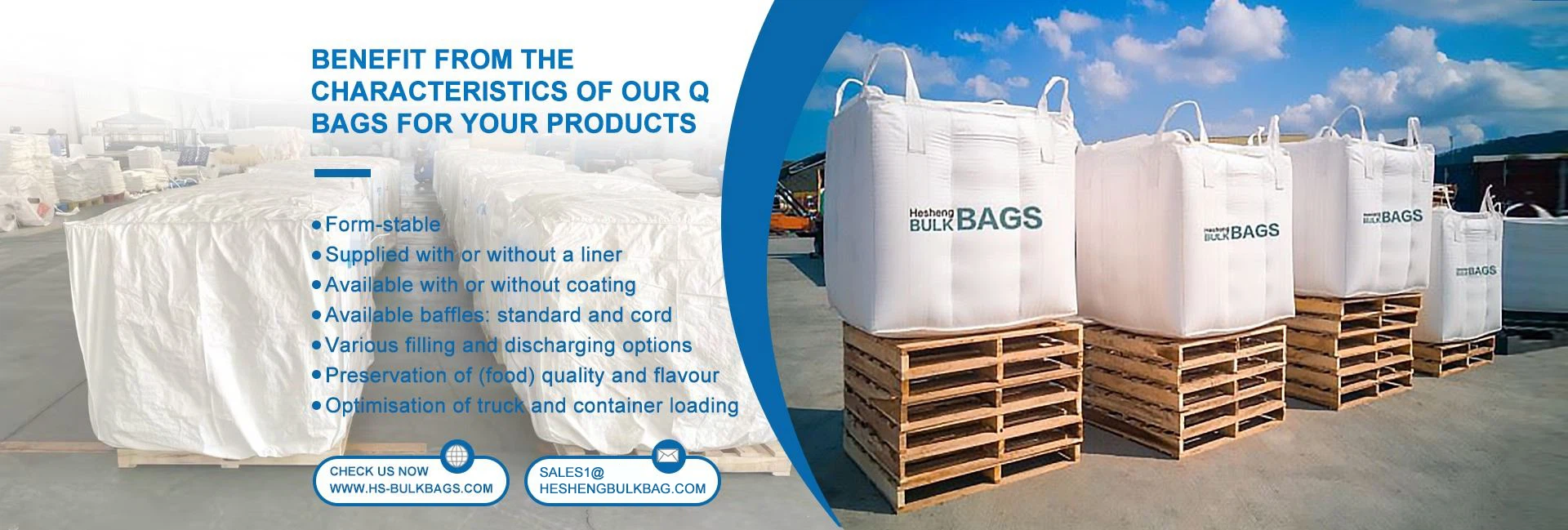
Definition and structure: Container bags are made of high-strength synthetic fibers, usually including bag bodies, slings and seals.
Functional characteristics: With good air permeability and waterproofness, they can effectively protect the loaded goods and facilitate storage and transportation.
Application areas: Widely used in chemical, grain, building materials, agriculture, food industry and other industries, used to load bulk materials, which can improve loading and unloading efficiency.
Types: According to the materials used, they can be divided into polypropylene (PP), polyester (PET) and other types; according to the shapes, they can be tetrahedral, cylindrical and U-shaped; according to the capacity, they can be divided into small (less than 1 cubic meter), medium (1-3 cubic meters) and large (greater than 3 cubic meters); there are also reusable, disposable and anti-static, moisture-proof and other special functions of container bags.
Common materials: Polypropylene materials are wear-resistant and chemical-resistant, and are often used to make lining layers; polyethylene materials have good waterproof properties and are often used for outer materials.
Principles of safe use: Check the tightness of the container bag before loading and transporting to ensure that there is no damage; strictly abide by the maximum load limit; ensure the correct carrying posture when using it to avoid waist sprain.
Filling and sealing method: Use a forklift or crane to evenly load the materials into the container bag to avoid overfilling. Sealing methods include heat sealing, sewing or zipper sealing, etc. After sealing, check carefully to ensure no leakage.
Storage and transportation precautions: Keep away from sharp objects to prevent the bag from being punctured or scratched; avoid humid environments and heavy objects pressing on the container bag; stack reasonably to ensure stability.

