When you hear "bagged gravel" and "eco-trend" in the same sentence, your first reaction is skepticism. Too often these days, every convenience is masqueraded as eco-friendliness. But if you dig deeper, look not at marketing brochures but at actual construction sites and quarries, the picture becomes far more interesting and complex. I've been working with bulk materials for many years, and for me, this issue isn't just theory, but daily practice with a ton of nuances that are usually kept quiet.
Where did this "fashion" for bags come from?
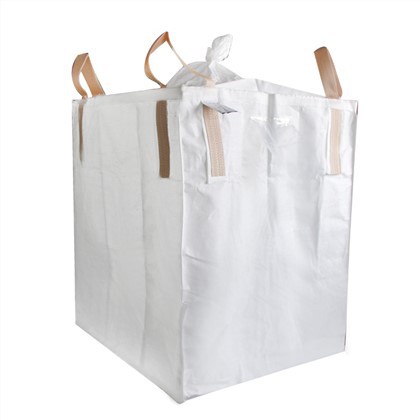
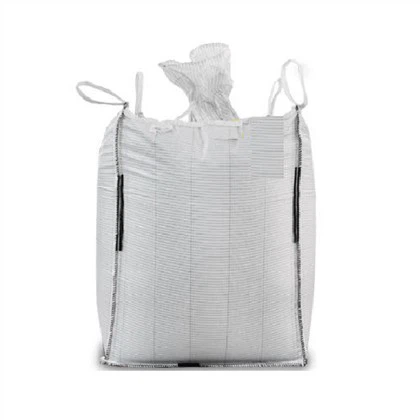
It all started not with an eco-conscious agenda, but with simple logistics and economics. Previously, gravel was transported in bulk, in dump trucks. Losses during handling, dirt on the roads, and difficulties with accurately recording volumes were a headache for any foreman. The advent of durable polypropylene big bags solved these problems in one fell swoop. The material has literally become a commodity: take a bag, know the exact weight, place it with a crane where you need it, tear it open-and there's no packaging waste in the traditional sense.
But herein lies the first catch. When we talk about sustainability, we need to clearly distinguish between the sustainability of the use process and the sustainability of the life cycle of the packaging itself. The former is more or less clear: less dust, more precise dosing, easier storage. But the latter... Polypropylene. It takes centuries to decompose. Yes, bags can be recycled, but in practice, especially at remote sites, they are often simply incinerated or buried. So where's the trend here?
I personally observed how at one site in the Leningrad Region they used gravel bags for temporary soil stabilization on an access road-they simply laid them down and covered them over. It was cheap and effective. But this isn't recycling; it's postponing the problem. And such half-measures are the majority.
Because bags can be made thinner but stronger through precise calculation of raw materials and weaving. Less plastic per unit of production is already a direct contribution to reducing the load. Their figures-sales volume increased to over 50 million yuan by 2006-speak not only to commercial success but also to the scalability of this slightly more responsible approach. But, again, this is only part of the solution.
The main environmental benefit of big-bag gravel is visible at the other end of the chain-at the customer. A reduced carbon footprint due to optimized transportation (more material per trip, fewer empty runs), no material loss (and for nature, every extra kilogram of gravel mined is a scar on the landscape), and a cleaner site. These are real, measurable benefits.
The pitfalls and pitfalls we've stepped on
I won't idealize it. Implementing this system is no fairy tale. I remember a project where we decided to buy "eco-bags" from a new supplier. We saved money. But on site, in temperatures as low as -15°C, they started bursting at the seams while being lifted by crane. It turned out the additives' frost resistance was just "on paper." All the gravel ended up in a snowdrift, work stalled, and the eco-friendliness resulted in enormous losses and further pollution. Since then, laboratory tests and real-world operating conditions have become dogma for me.
Another common problem is false economy. The client buys the bags but refuses the services of a crane and tries to unload them by hand. The bags rip, and the material spills. The result: the same mess, plus mountains of torn polypropylene, which no one will definitely collect for recycling. The eco-trend is shattered by the lack of preparedness in everyday life.
Or the story with "biodegradable" additives. We tried it. They promised the bag would fall apart in a couple of years. In reality, it was losing its strength after just six months of storage in a warehouse exposed to the sun. Risking a 1,000 kg load? No way. They refused. Sometimes reliability and durability are also a form of eco-friendliness, as they prevent accidents.
So is this a trend? More like the evolution of logistics.
Calling this solely an eco-trend is a gross oversimplification. It is, first and foremost, a trend toward efficiency and resource management. Environmental friendliness is not the primary goal here, but largely a secondary, albeit extremely valuable, effect of optimization. The market is driven not so much by demand for "green" as by demand for "convenient and precise."
But it is precisely this pragmatism that gives hope. Because what is economically viable and technologically convenient truly takes hold and scales. And then it's a matter of awareness. When all players in the supply chain, from bag manufacturers like Hebei Hesheng to site supervisors, begin to see this packaging not as a consumable but as an element of the system, a closed loop emerges: design → use → return/recycling.